
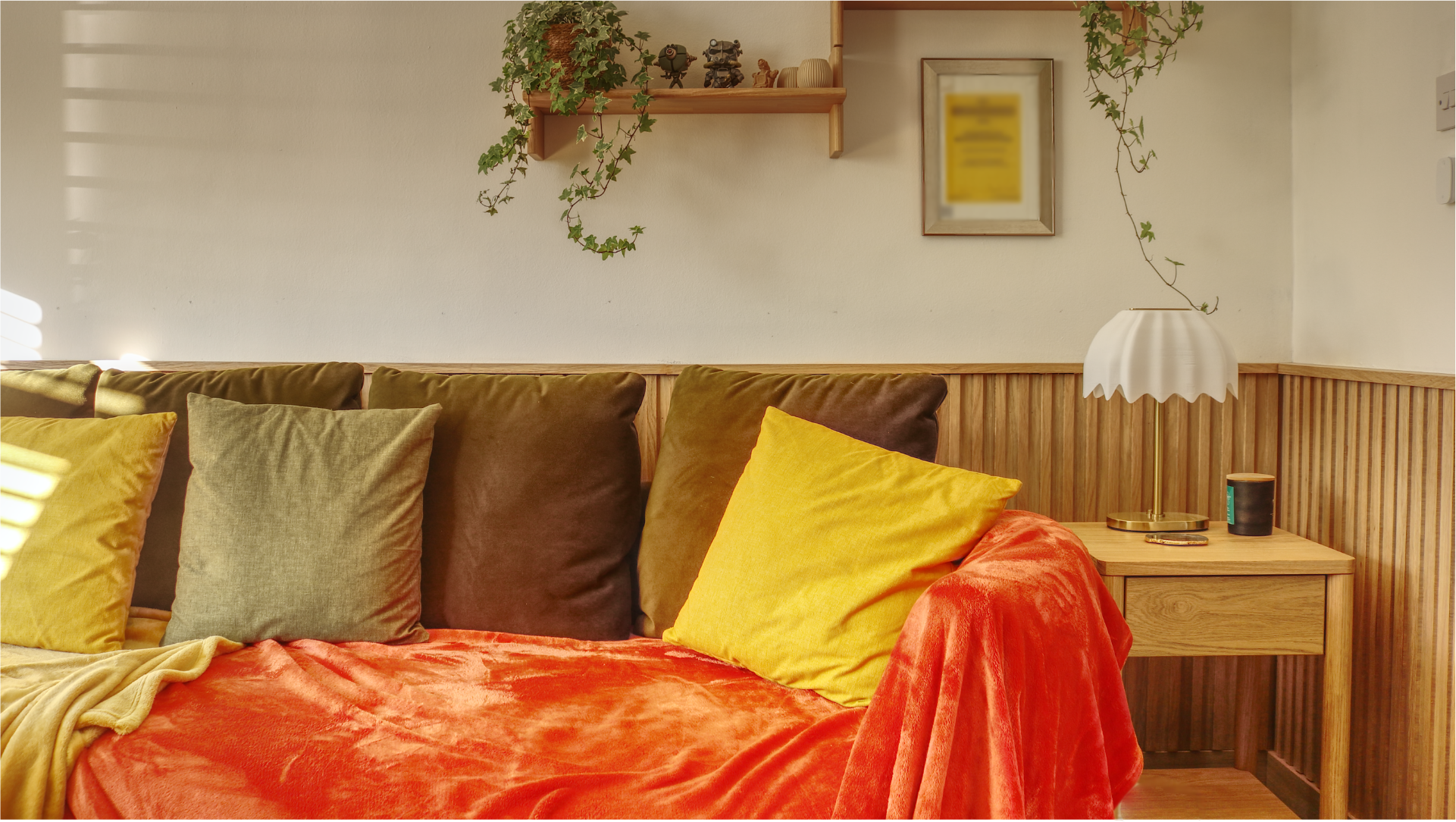
Before I start, I am not a carpenter..Unfortunately
Nor am I a builder. I am though, an ambitious local interior designer who loves natural materials, good proportions, and trying to work out whether something can be made better than the version being sold to me.
So please take the method in this blog with a pinch of salt, and if you are planning to do something similar in your own home, consult a builder or someone who knows what they are doing structurally. What I really want you to pay attention to is the bespoke interior design thinking behind it, because that is where this project became interesting. Sure I’m going to sell you the idea of interior design services but hopefully you can leave here with some confidence on cool design thinking.
Lately, I have felt that everything in interiors has to be sold as a product, a system, or a complete ready-made solution. There is a panel for this, a kit for that, a luxury finish for something that used to be made by hand. Somewhere along the way, we seem to have lost a bit of that older idea of bespoke, crafted, problem-solving design, where someone looks at a space and asks what could be made specifically for it. I will admit I fall for this or well my wife does, I love Ikea and John Lewis but that’s not saying they can be improved on but more on that in another blog.
This is where this wood slat wall started.
Why we wanted a wood slat wall in the first place
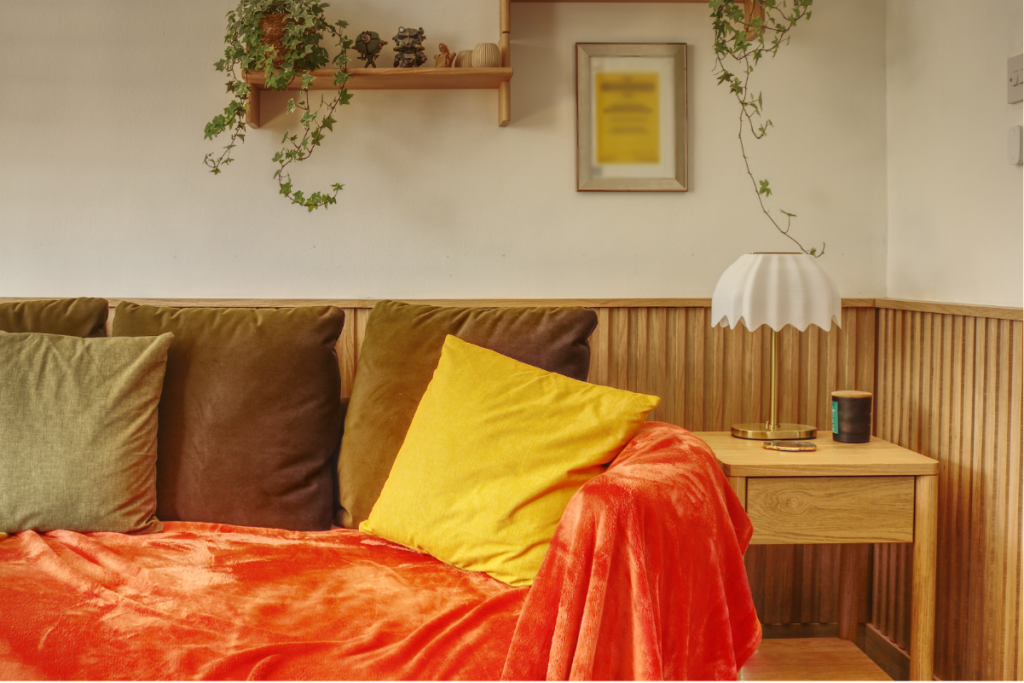
When we moved into our first home, we knew we wanted to bring more warmth into the living space. The room needed something with texture and depth, but we did not want it to feel overly polished or too modern. The aim was somewhere between modern cottage interiors, with clean lines but enough natural material to make the space feel soft, warm, and lived in.
A wood slat wall felt like the right answer because timber has a way of doing that without trying too hard. Natural materials can elevate a room very quickly, and why would they not? We have been using wood, stone, clay, plaster, and fabric for hundreds of years because they work. They age, they change in the light, and they bring a kind of depth that manufactured finishes often try to imitate but rarely quite manage.
For me, it was never just about adding a feature wall. It was about using a real material to change how the room felt as a considered interior. looking at the idea of a DIY wood slat wall, or wooden feature wall.
The quote that made me rethink everything
Originally, I saw a really nice wood slat wall in an interiors shop and asked who had made it. Needless to say, it came from a company that supplied luxury interior products, which usually means you should prepare yourself emotionally before asking for a price.
I gave them a call, explained the size of the wall, and was told it would be around £1,000 per linear metre. Our wall is roughly three and a half metres wide, so the cost was heading towards £3,000 very quickly.
What surprised me even more was that the product was not even solid wood. It was oak-faced MDF.
Now, I have nothing against MDF when it is used honestly and appropriately, but at that price I expected something more than a timber effect surface on a manufactured board. The alternative was to buy one of the cheaper slat wall products you see in DIY stores, but those often have that slightly fake wood appearance, where the finish looks acceptable from a distance but loses all its charm the closer you get.
So I was left with two options that did not feel right. Spend thousands on something that was not really solid timber, or spend less on something that looked like a compromise.
That was when I thought, surely I can build something closer to what I actually want going down the route of affordable bespoke interiors.
Designing it from scratch
Once I had decided to make it myself, the first step was measuring the wall properly and thinking about the proportions. A slat wall looks simple, but the spacing, depth, rhythm, and shadow are what make it work. If the battens are too shallow, it can look flat. If the spacing is wrong, it can feel busy or awkward. The whole thing relies on repetition, but that repetition has to feel deliberate.
I got in contact with Christchurch Timber, who had supplied smaller pieces of wood for me in the past. After explaining what I was trying to do, they mentioned that the minimum batten width they could cut was around 22mm. Even better they could do oak faced MDF for a good price. I believe my cost of materials was around £300 to £350 which also gave a lot of of cuts and spares.
That became the starting point for the whole design.
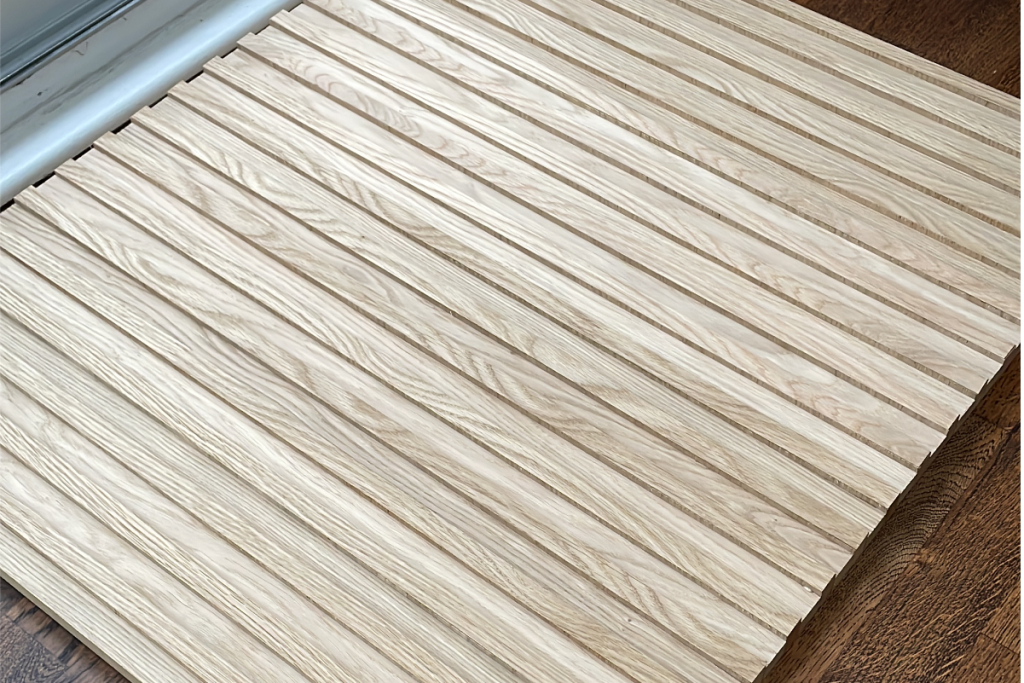
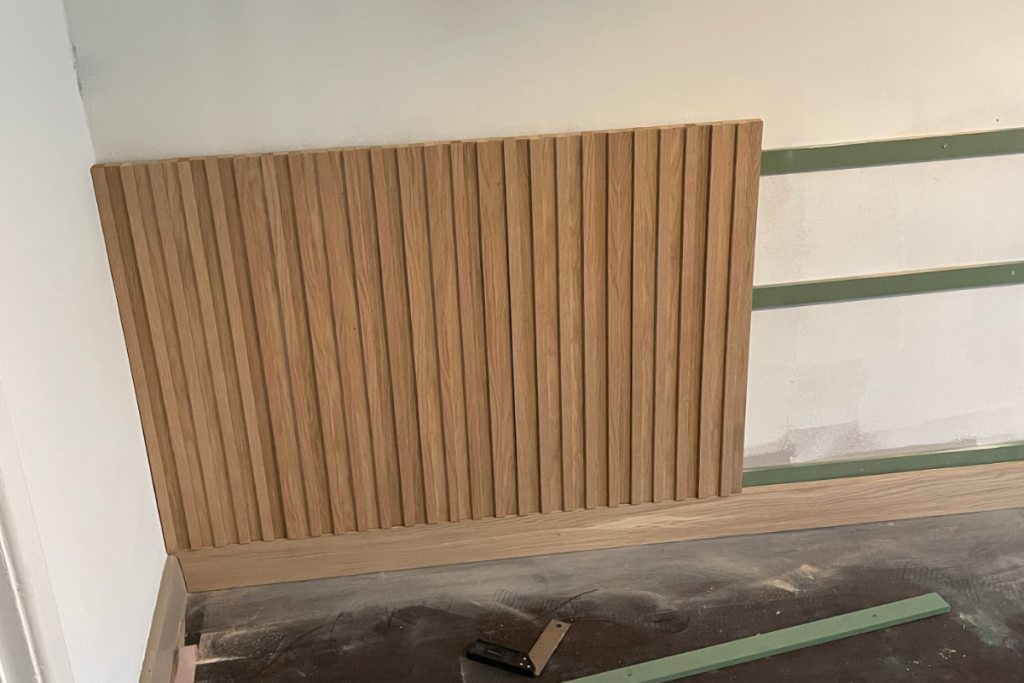
If the timber was cut to 22mm, I could alternate the visible faces of the battens, using the side, then the front, then the side again, to build up the panels. It meant the wall would have a more considered rhythm rather than just being a set of flat strips glued to a backing board.
This is the part I enjoy most in projects like this. You start with a constraint, in this case the minimum cut size, and instead of seeing it as a limitation, it becomes the thing that shapes the design.
Building the panels
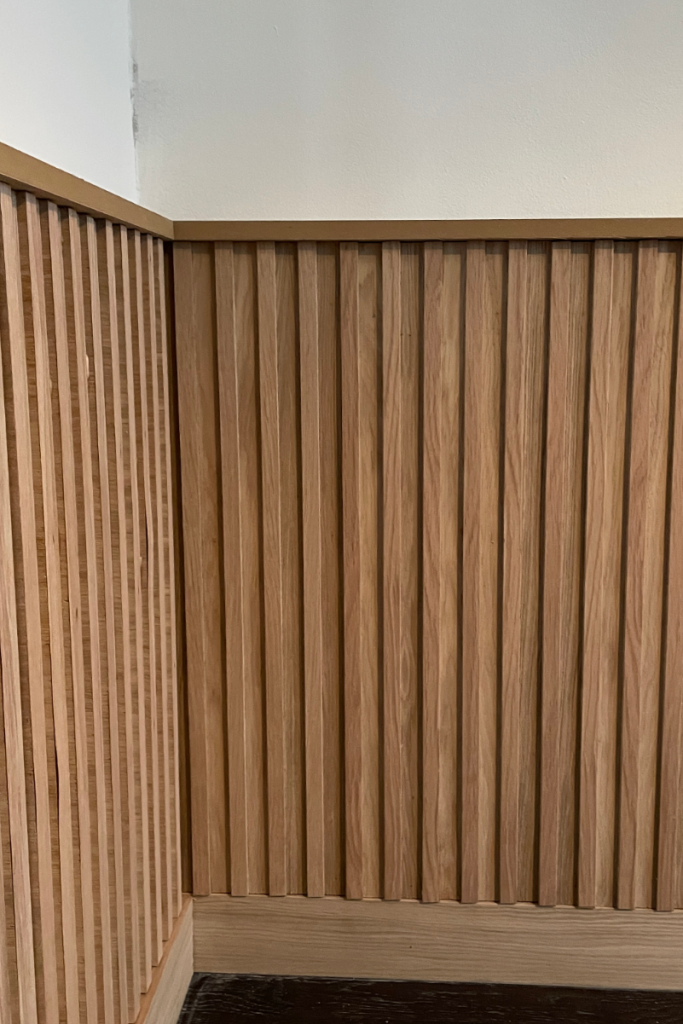
I spent a few days gluing the battens together and fixing them to the wall. It was not glamorous work, and I am sure a professional carpenter would have had several opinions about my method, but it worked.
I used moisture-resistant MDF as rails to attach the panels onto, and I added new oak-faced skirting over the old skirting to allow the panels to sit neatly and create enough depth for the top section. I should say again that this is not necessarily best practice, but it made sense for the space and gave me the finish I wanted.
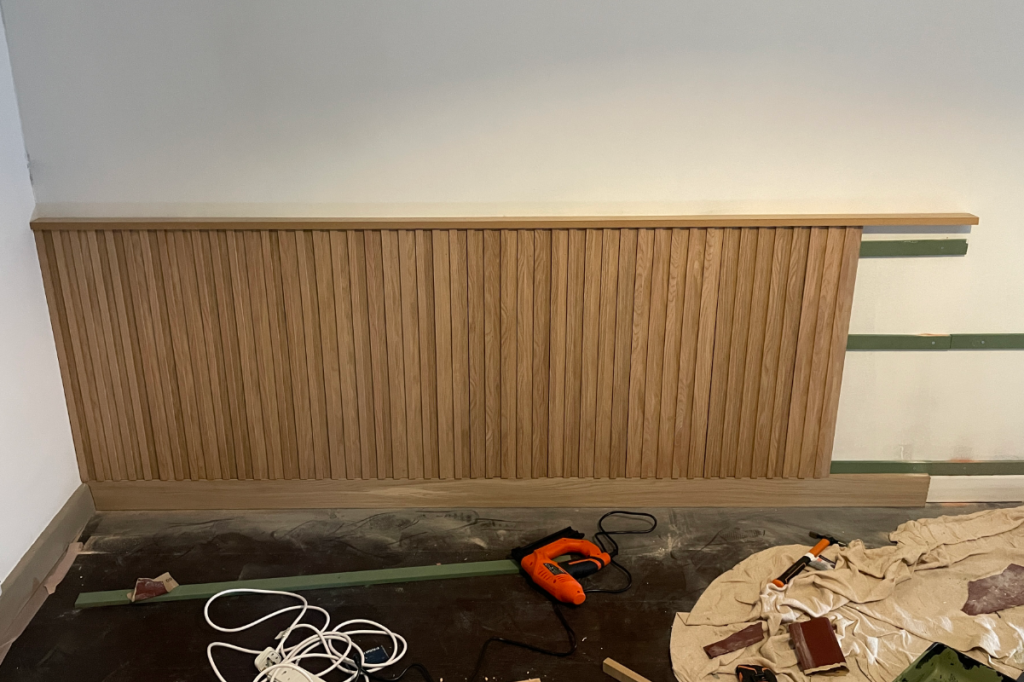
The panels were fixed in place using a nail gun, with Gorilla Glue added to make sure everything sat securely. Once everything had dried, I added a top rail with a slight overhang, which helped create shadow and made the whole piece feel more finished rather than just stopping abruptly at the top. Those small types of details are what makes a project come together than merely smashing materials together.
That shadow detail ended up being more important than I expected.
What makes a good wood slat wall
A good wood slat wall is not just about the wood. It is about shadow, texture, and how the light moves across it during the day.
If you are thinking about adding one in your own home, I would always look at where the light falls before deciding where it should go. A wall that catches changing light will show the grain, depth, and rhythm of the slats much better than one that sits in a flat, dark corner.
That is where timber really earns its place. It does not stay visually static. It shifts throughout the day, catching warmth in the morning, creating deeper shadows in the evening, and making the room feel less flat overall.
This is also why ‘real’ timber mattered to me. I say real as its oak faced with real oak edging strips. A printed or fake plastic finish might copy the idea of wood, but it does not behave like wood. It does not catch light in quite the same way, and it does not have the same irregularity or depth.
Why making it yourself changes the result
The real benefit of designing something from scratch is not only that it costs less, although in this case that definitely helped. The bigger benefit is that you can respond to your own space rather than forcing a standard product into it.
You can choose the spacing between the battens, and whether to introduce wider panels, shelves, LED lighting, or a different top detail. You can also make decisions based on the room, the light, the proportions, and how you actually live there. Working with an interior designer and carpenter, I would say now you’re cooking.
That is the bit that gets lost when everything becomes a ready-made product. Convenience is useful, but it often removes the opportunity to make something personal. I read there’s a boundary between meaningful changes and changes for the sake of profit. Are you doing changes like this to increase the value of your house or are you creating something special to pass onto others.
Interiors should be personal. Not in the sense that every corner needs to be covered in sentimental objects, but in the sense that the space should feel like it has been thought about properly.
I know I make a lot of mess when building, I can’t help it.
What this project proved to me
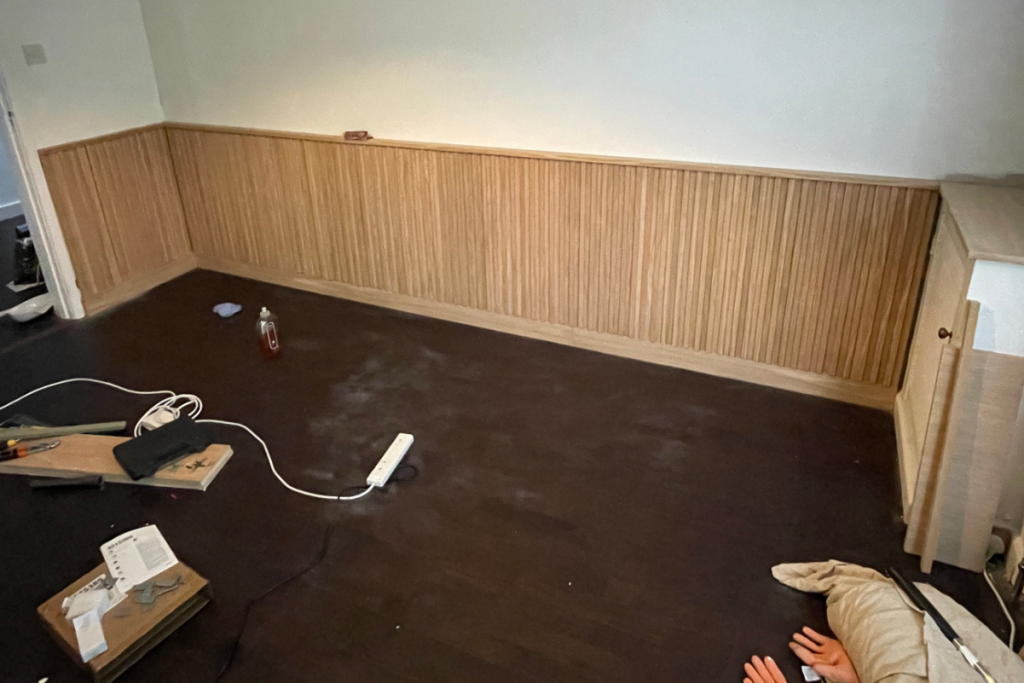
The point of this project was not just that I managed to reduce the cost, although going from around £3,000 plus to roughly a tenth of that was obviously satisfying. The real point was that a bit of creative thinking and effort can often produce something more personal than the expensive off-the-shelf version.
Sometimes, when people think about hiring an interior designer, they imagine someone pointing them towards the most expensive products or pulling together a collection of luxury finishes. But good interior design is not about choosing the most expensive thing in the room.
It is about looking at a space and working out what will actually make it better.
Sometimes that might be a high-end product, but often it is a smarter use of material, a more thoughtful detail, or a bespoke solution that fits the room properly. In this case, it was as simple as building a wood slat wall from scratch rather than buying one that did not quite feel right.
Final thought
I am not suggesting everyone should pick up a nail gun and start building their own bespoke interiors without help. There are plenty of reasons to bring in trades, and plenty of things that absolutely should be done by professionals.
But I do think this project says something important about design.
A good interior is not built from expensive products alone. It is built from good decisions, honest materials, and a willingness to question whether the standard solution is actually the best one. This is material-led interior design
For us, the wood slat wall added exactly what the room needed. Warmth, texture, shadow, and a bit of personality. More importantly, it felt like ours, not because it was perfect, but because it was designed for the space rather than bought as a system.
And sometimes that is the difference between a room that looks finished and a room that feels considered.
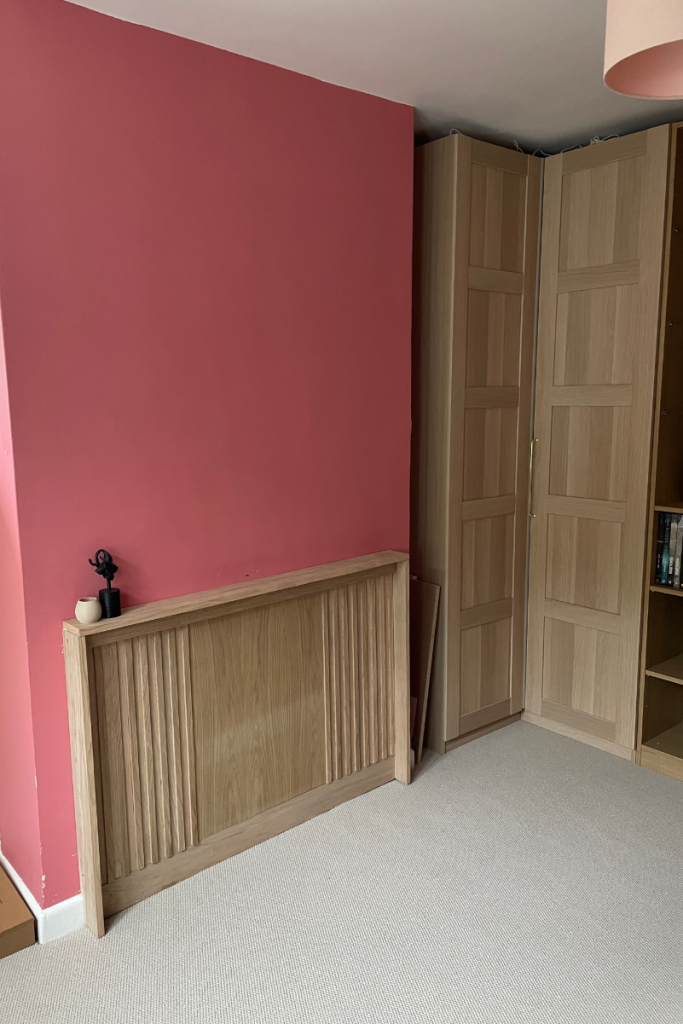
As mentioned those off cuts where important as I could add them to other rooms to make features that connected the the rooms together.
FAQ: Wood slat walls, bespoke interiors and working with a local designer
How much does a wood slat wall cost in the UK?
The cost of a wood slat wall in the UK can vary widely depending on the material, size of the wall, and whether you choose a ready-made panel system or a bespoke design. Luxury slat wall systems can cost significantly more than DIY or locally sourced timber options, especially if installation is included. Best idea is to work out your budget first and why you are committing to the project. Of course we spent around £400, tools and extras included but I guess my time was free where as our rough quote we got was 1k a linear metre.
Is a wood slat wall worth it?
A wood slat wall can be worth it if you want to add warmth, texture, and depth to a room without completely redesigning the space. The most successful slat walls are not just decorative features, but considered design details that respond to the light, proportions, and character of the room. They can be all the way up to ceiling or just a little addition.
Can an interior designer help with small home projects?
Yes, an interior designer can help with small home projects, including feature walls, material choices, layouts, furniture placement, lighting ideas, and bespoke design details. Interior design is not always about full renovations or luxury schemes, it can also be about finding creative ways to make one part of your home work better.
I like to think of it as this. Why have a room for one purpose when it can serve multiple at roles at once.
Why work with a local interior designer?
Working with a local interior designer can be useful because they understand nearby suppliers, trades, materials, and the character of homes in the area. A local designer may also be better placed to suggest bespoke or cost-effective solutions that suit your space rather than relying only on standard products.
What is bespoke interior design?
Bespoke interior design means creating a design solution specifically for your home, rather than simply choosing an off-the-shelf product. This could include custom furniture, built-in details, material-led features, or small design changes that make a room feel more personal and considered. It becomes more integrated with local trades to find the best solution for you.
Do I need an interior designer if I already know what I like?
You do not need to hand over your taste to an interior designer. A good designer helps refine what you already like, making sure the materials, proportions, colours, and details work together in the actual space. This can save money by avoiding choices that look good online but do not work as well in your home.
Can a local designer make interiors more affordable?
A local designer can often help make interiors more affordable by suggesting alternative materials, local suppliers, and bespoke approaches that avoid unnecessary luxury mark-ups. Good design is not always about spending more, but about knowing where spending actually makes a difference.
If you have some interior projects in mind contact us via the form.
Leave a Reply